AirTag vs. Kartenförmige Geldbörsen-Tracker
Antwort-zuerst-Zusammenfassung
Wenn schnelles, präzises Finden der Geldbörse wichtiger ist als maximale Schlankheit, ist der AirTag meist die bessere Wahl. Er ist dicker als Karten-Tracker, aber Präzisionssuche und die Möglichkeit, einen Ton abzuspielen, machen es viel einfacher, eine verlorene Geldbörse zu Hause, im Büro oder im Auto zu finden. Das Volumenproblem kann auch mit einer speziell für AirTag entworfenen Geldbörse reduziert werden, da der Tracker in einem eigenen Fach gehalten wird und nicht in einen Standard-Kartensteckplatz gezwängt wird.

Karten-Tracker für Geldbörsen sind viel dünner – typischerweise etwa 1,7–2,6 mm – und liegen flach in einem Kartensteckplatz, wodurch das Portemonnaie schlanker bleibt. Die meisten können einen Ton abspielen, wenn Sie in der Nähe sind, und ihren Standort in der App anzeigen, bieten aber ohne Ultra Wideband keine Richtungsanzeige mit Pfeil und Distanz, die den AirTag bei der präzisen Suche in Innenräumen besonders effektiv macht.

Die Netzabdeckung ist wichtiger als die reine Bluetooth-Reichweite. Sowohl AirTag als auch Find My-kompatible Karten-Tracker sind auf nahe Geräte angewiesen, die Standortaktualisierungen weiterleiten. Das bestimmt meist, wie gut sie funktionieren, wenn eine Geldbörse irgendwo in der Welt verloren geht und nicht nur in der Nähe verlegt wurde.
Die richtige Wahl hängt von Volumen versus Suchmethode ab. Wenn Sie Ihre Geldbörse oft zu Hause, im Auto oder im Büro verlegen, sind AirTags Präzisionssuche und akustische Warnungen ein echter praktischer Vorteil. Wenn Sie die schlankstmögliche Geldbörse wollen und sich darauf verlassen können, die Position in der App plus einen Tonalarm beim Näherkommen zu nutzen, ist ein Karten-Tracker meist die bessere Wahl.
Sind Karten-Tracker besser als ein AirTag für Ihre Geldbörse?
Was die Schlankheit betrifft, haben Karten-Tracker meist den Vorteil. Der AirTag ist etwa 8 mm dick und rund, sodass er in einer Geldbörse eher eine konzentrierte Beule erzeugt, anstatt die Dicke gleichmäßig über das gesamte Profil zu verteilen. In einer alltäglichen Lederbörse, die bereits Karten und gefaltete Geldscheine enthält, kann sich das wie zusätzliches Volumen an einer bestimmten Stelle anfühlen, statt einer subtilen Gesamtzunahme.
Das ist der Hauptgrund, warum Karten-Tracker bei Nutzern schlanker Geldbörsen beliebt sind. Die meisten sind weniger als etwa 2,6 mm dick, sodass sie in einen Kartensteckplatz passen und die Form der Geldbörse flacher und gleichmäßiger halten. Wenn Ihre oberste Priorität darin besteht, die Geldbörse so schlank wie möglich in einer Vorder- oder Gesäßtasche zu halten, ist ein Karten-Tracker in der Regel die bessere Wahl.
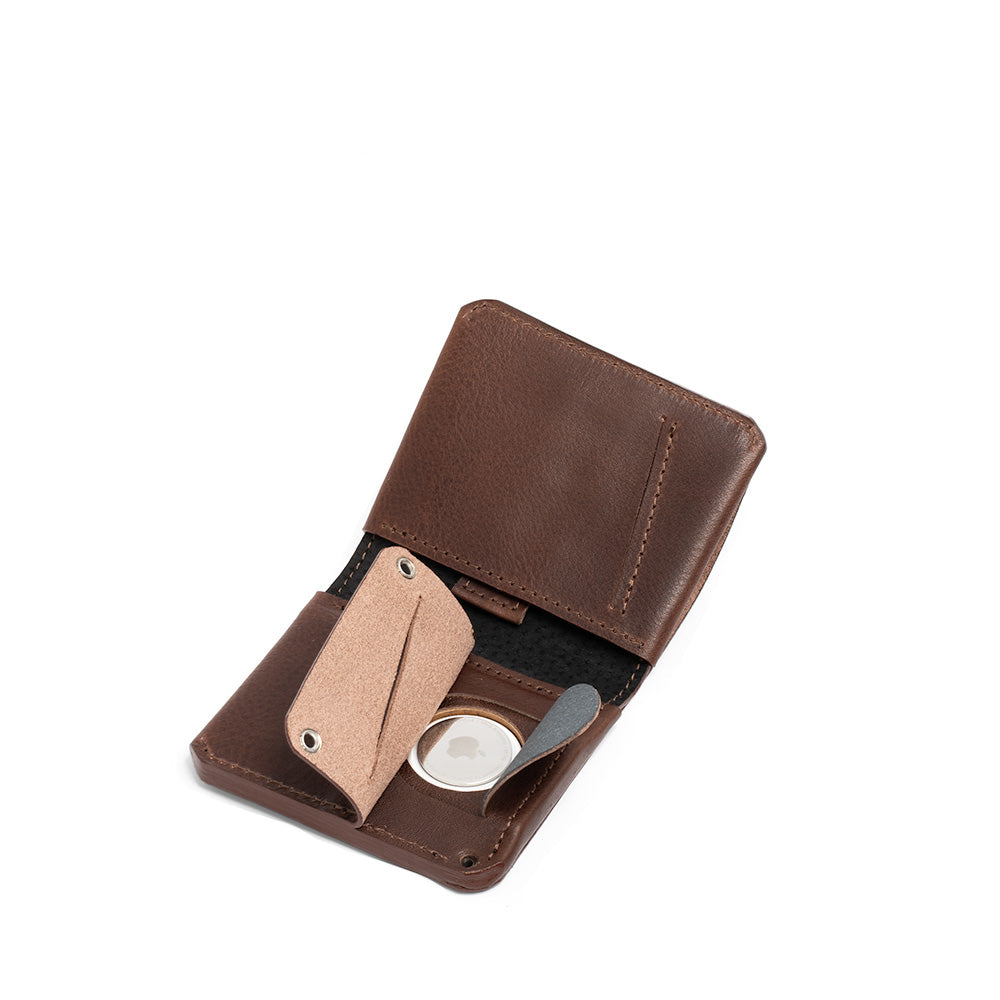
AirTag kann in einer Geldbörse immer noch gut funktionieren, aber es macht am meisten Sinn, wenn die Geldbörse speziell dafür entworfen wurde. Ein spezielles AirTag-Fach hilft, den Tracker sauberer zu integrieren und reduziert die unangenehme Beule, die entsteht, wenn man versucht, einen runden Tracker in ein Standard-Kartenlayout einzufügen. Deshalb kann eine AirTag-fähige Geldbörse eine praktischere Lösung sein, als AirTag in eine herkömmliche Geldbörse zu zwängen.

Bildquelle: Geometric Goods' Leder-Kartenbörse für AirTag - The Minimalist 5.0
Der Kompromiss ist die Geschwindigkeit in unmittelbarer Nähe. Wenn sich Ihre Geldbörse irgendwo in der Nähe, aber versteckt befindet – unter einem Kissen, hinter einem Monitor oder in einer Jackentasche – kann AirTags Precision Finding entscheidender sein als einfach nur einen Ton abzuspielen und mit dem Gehör zu suchen. Einige Karten-Tracker können ebenfalls einen Ton abspielen, aber ohne UWB verlässt man sich meist auf Ton und allgemeine Nähehinweise, was in unübersichtlichen Innenräumen langsamer sein kann.

Bildquelle: Geometric Goods' Leder-Geldbörse 2.1 für AirTag
Kompatibilität & Ökosysteme
AirTag
AirTag ist für Apples Ökosystem konzipiert und erfordert ein Apple-Gerät sowie ein Apple-Konto für Einrichtung und den täglichen Gebrauch. Es funktioniert über die Find My-App, und Precision Finding ist nur auf kompatiblen iPhone-Modellen mit Ultra Wideband-Unterstützung verfügbar.
Nomad-, Pebblebee-, Chipolo- und eufy-Karten
Alle vier hier besprochenen Karten-Tracker sind dafür ausgelegt, mit Apples Find My-Netzwerk zu arbeiten. Sie werden über die Find My-App als kompatible Zubehörteile hinzugefügt und erscheinen zusammen mit Ihren anderen Apple-Geräten und -Gegenständen.
Pebblebees Card 5 ist flexibler als die anderen, da sie je nach Version oder Modus entweder mit Apples Find My-Netzwerk oder mit Googles Netzwerk gekoppelt werden kann. Im Gegensatz dazu sind eufys SmartTrack Card und Chipolo CARD Spot auf Apple ausgerichtete Optionen und unterstützen nicht Googles Android-basiertes Tracking-Netzwerk.
Dicke und Formfaktor: Passt es in Ihre Geldbörse?
AirTag-Massenkauf und realer Geldbörsentragekomfort
AirTag misst 1,26 Zoll im Durchmesser und 0,31 Zoll in der Dicke (31,9 mm × 8 mm). In einer Brieftasche ist diese Dicke auf eine runde Fläche konzentriert und nicht gleichmäßig verteilt, weshalb sie in der Tasche eine spürbare Beule erzeugt. Am ehesten spürt man sie beim Sitzen oder wenn man die Brieftasche in einer engeren Vorder- oder Gesäßtasche trägt.
In einer normalen Leder-Bifold-Brieftasche – nicht nur im schlanksten minimalistischen Design – kann AirTag trotzdem bequem sein, wenn die Brieftasche so gestaltet ist, dass sie es von dem dicksten Kartenstapel und gefaltetem Bargeld fernhält. Deshalb bevorzugen viele Menschen eine Brieftasche mit einem speziellen AirTag-Fach, anstatt zu versuchen, den Tracker in ein Standardkartenfach zu zwängen.
Praktischer Hinweis: Wenn Sie ein AirTag-in-Brieftasche-Setup möchten, beginnen Sie mit Brieftaschen, die speziell für das Tragen von AirTag entwickelt wurden, wie der Leather AirTag Wallet 2.1 oder der Leather AirTag Card Wallet Minimalist 5.0.
Kartengröße und warum sie sich leichter tragen lassen
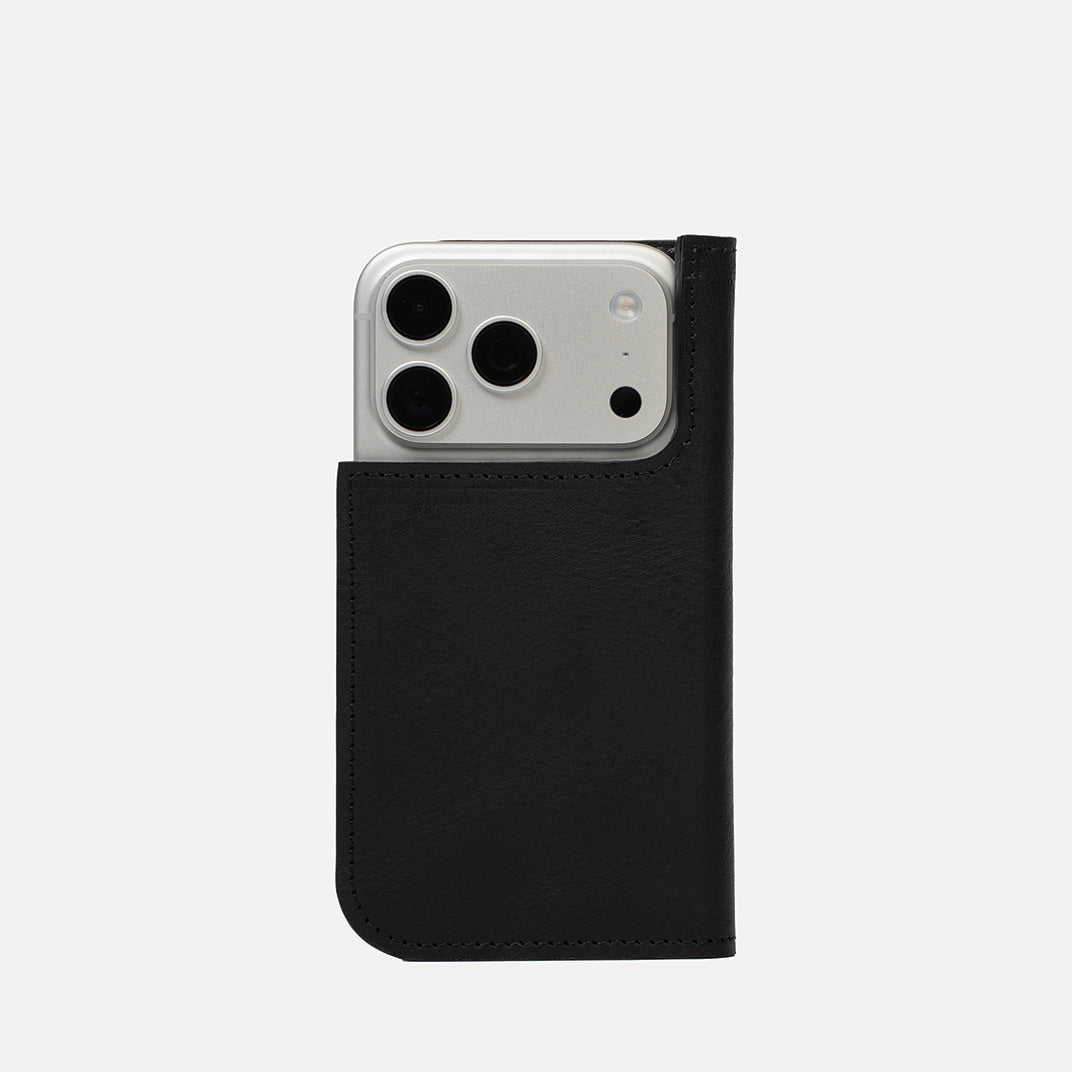
Kartenförmige Tracker sind viel dünner als AirTag, weshalb sie normalerweise natürlicher in einem Kartenfach einer Brieftasche sitzen und im Alltag weniger auffallen.
- Nomad Tracking Card – 3,39 × 2,13 × 0,07 Zoll; 0,42 oz (86 × 54 × 1,7 mm; 12 g); IPX7
- Pebblebee Card 5 – 2,13 × 3,35 × 0,07 Zoll; 0,49 oz (54 × 85 × 1,74 mm; 14 g); IP66
- eufy SmartTrack Card – 3,35 × 2,13 × 0,10 Zoll (85 × 54 × 2,6 mm)
- Chipolo CARD Spot – ca. 3,35 × 2,11 × 0,09 Zoll (ca. 85,1 × 53,6 × 2,4 mm); IPX5 [Quellenangabe erforderlich]
Akkulaufzeit & Laden
Wie Sie einen Tracker mit Strom versorgen, ist wichtiger, als viele denken, besonders wenn Sie auf Funktionen zur Nahbereichssuche angewiesen sind, wie das Abspielen eines Tons, wenn Ihre Brieftasche unter einem Sofakissen, in einer Jackentasche oder im Schreibtischchaos verloren geht. Wiederaufladbare Karten reduzieren den Batteriewechsel, erfordern aber auch ein weiteres Gerät, das aufgeladen werden muss. AirTag hingegen verwendet eine austauschbare Knopfzelle, sodass die Wartung seltener, aber nicht dauerhaft kabellos ist.
- AirTag – austauschbare CR2032-Knopfzelle; Apple gibt an, dass sie je nach Nutzung mehr als ein Jahr hält, bevor ein Austausch nötig ist.
- Nomad Tracking Card – wiederaufladbar; hält 5 Monate pro Ladung; unterstützt Qi- und MagSafe-Kabelloses Laden.
- Pebblebee Card 5 – wiederaufladbar; hält bis zu 18 Monate pro Ladung; unterstützt kabelloses Laden.
- eufy SmartTrack Card – modellabhängig: Offizielle eufy-Materialien zeigen derzeit sowohl eine wiederaufladbare Version mit magnetischem Ladegerät, die für bis zu 1 Jahr ausgelegt ist, als auch eine nicht wiederaufladbare / nicht austauschbare Version, die für bis zu 3 Jahre ausgelegt ist. Bitte überprüfen Sie das genaue Modell vor der Veröffentlichung.
- Chipolo CARD Spot – versiegelte, nicht austauschbare Batterie; ausgelegt für bis zu 2 Jahre; berechtigt für Chipolos Erneuerungs- / Renew & Recycle-Programm.
Netzwerk & Reichweite
Alle diese Tracker verlassen sich auf crowdsourced Bluetooth-Netzwerke, um den Standort über nahe Geräte weiterzuleiten. Für AirTag und Apple Find My-kompatible Karten bedeutet das Apples Find My-Netzwerk, das auf einer großen Basis von Apple-Geräten beruht. Apple sagt, der Prozess sei Ende-zu-Ende-verschlüsselt, sodass weder Apple noch der Zubehörhersteller den Standort Ihres Gegenstands einsehen können.
Die Bluetooth-Reichweite ist hauptsächlich für nahe Aktionen wichtig, wie das Abspielen eines Tons, das Wiederverbinden, wenn man in der Nähe ist, oder das Aktualisieren eines kürzlich gesehenen Standorts. Sobald der Tracker außerhalb der direkten Bluetooth-Reichweite ist, ist die Netzabdeckung der größere Faktor: Der Standort Ihrer Geldbörse kann aktualisiert werden, wenn ein anderes kompatibles Gerät in der Nähe vorbeikommt.
Speziell für den AirTag umfasst das nahe Auffinden auch das präzise Finden auf unterstützten iPhones, das Richtung und Entfernung zum Tracker anzeigen kann. Apple sagt, dass der neuere AirTag auch eine bis zu 1,5-mal größere Reichweite für das präzise Finden als die vorherige Generation bietet. Für mehr Kontext, wie der AirTag der ersten Generation auf kurze Distanz im offenen Raum und um gängige Haushaltsgegenstände herum funktioniert, siehe unseren AirTag-Reichweiten-Guide.
Die Pebblebee Card 5 ist flexibler als die meisten, da sie auch mit Googles Find Hub-Netzwerk im Google-Modus funktioniert, anstatt mit Apples Find My-Ökosystem.
Zusätzliche Funktionen & Einschränkungen
Präzises Finden (Richtung + Entfernung): Hier sticht der AirTag hervor, da er auf unterstützten iPhones Ultra Wideband-basiertes präzises Finden unterstützt. Apple sagt, dass der neuere AirTag auch eine erweiterte Reichweite für das präzise Finden im Vergleich zur vorherigen Generation bietet. Kartenförmige Tracker in diesem Vergleich verfügen nicht über UWB, daher bieten sie keine gleiche Richtungsanzeige mit Pfeil und Entfernungsangabe; in der Praxis verlässt man sich stattdessen auf Kartenstandort, Tonalarme und allgemeine Nähehinweise.
Können Karten-Tracker einen Ton abgeben? Ja. Die meisten Find My-kompatiblen Karten unterstützen eine „Ton abspielen“-Funktion in der App. Dennoch kann das Auffinden von Geldbörsen in der Praxis schwierig sein: Leder, Taschen, Beutel, Kissen und Möbel können den Ton dämpfen, und der Summer der Karte ist möglicherweise weniger deutlich als erwartet. eufy gibt beispielsweise einen Alarm mit 80 dB für seine SmartTrack Card an.
Wasserbeständigkeit: AirTag ist nach IP67 zertifiziert. Nomads Tracking Card ist nach IPX7 zertifiziert, und Pebblebee Card 5 nach IP66. eufy beschreibt seine SmartTrack Card als wasserresistent, aber die aktuell geprüften offiziellen Materialien geben keine spezifische IP-Zertifizierung an. Chipolo CARD Spot wird oft als IPX5 gelistet, aber diese Spezifikation sollte vor Veröffentlichung anhand der Herstellerdokumentation überprüft werden.
Speziell bei AirTag umfasst das Auffinden in der Nähe auch Precision Finding auf unterstützten iPhones, das Richtung und Entfernung zum Tracker anzeigen kann. Apple sagt, dass der neuere AirTag eine bis zu 1,5-fach größere Precision-Finding-Reichweite als die vorherige Generation bietet. Wenn Sie mehr Kontext zur praktischen Reichweite des AirTag der ersten Generation im Freien und durch übliche Haushaltsbarrieren wünschen, sehen Sie unseren AirTag-Reichweiten-Guide.
Mythen & Fehler
- „AirTags funktionieren nicht in Portemonnaies.“ Sie können funktionieren, aber die Dicke verändert das Tragegefühl. Die 8 mm runde Form des AirTag kann eine spürbare Erhebung verursachen, es sei denn, das Portemonnaie ist speziell dafür ausgelegt.
- „Kartentracker haben GPS.“ Nein. Sie verwenden Bluetooth und Crowdsource-Tracking-Netzwerke für Standortaktualisierungen; sie bieten kein kontinuierliches Echtzeit-GPS-Tracking.
- „Kartentracker bieten das gleiche Indoor-Finderlebnis wie AirTag.“ Meist nicht. Kartentracker können einen Ton abspielen und den Standort in der App anzeigen, bieten aber ohne Ultra Wideband normalerweise nicht das gleiche Richtungs- und Entfernungs-Precision-Finding-Erlebnis.
Wie Sie den richtigen Portemonnaie-Tracker auswählen
-
Beginnen Sie mit Ihrem realen Problem.
- Wenn Sie Ihr Portemonnaie oft zu Hause, im Auto oder im Büro verlegen, sind AirTags mit Precision Finding und Soundbenachrichtigungen meist die bessere Wahl.
- Wenn Ihr Hauptziel ist, Ihr Portemonnaie schlank zu halten und trotzdem nützliche Standort- und Soundbenachrichtigungen zu erhalten, ist ein Kartentracker meist die bessere Wahl.
-
Wählen Sie Ihr Ökosystem.
- In einem Haushalt mit nur Apple-Geräten sind sowohl AirTag als auch Find My-kompatible Kartentracker praktikable Optionen.
- Wenn Sie eine Mischung aus Apple- und Android-Geräten verwenden, ist ein Tracker, der sich in Googles Netzwerk einbinden lässt, flexibler, wie zum Beispiel die Pebblebee Card 5 im Google-Modus.
-
Entscheiden Sie, wie viel Dicke Sie tolerieren können.
- Wenn der Tragekomfort in der Tasche, besonders in der Vorderhosentasche oder beim Sitzen, am wichtigsten ist, gewinnen meist Kartentracker.
- Wenn Sie eine lokale Erhebung in Kauf nehmen können, um das schnellere Auffinden in der Nähe zu ermöglichen, könnte AirTag die richtige Wahl sein.
-
Wählen Sie Ihren bevorzugten Stil zur Batteriewartung.
- AirTag: austauschbare Batterie; einfache langfristige Pflege.
- Wiederaufladbarer Karten-Tracker: schlankere Bauform, aber Sie müssen daran denken, ihn aufzuladen.
- Karte mit versiegelter Batterie: wartungsarm für eine feste Lebensdauer, danach muss der gesamte Tracker ersetzt werden.
-
Unterschätzen Sie das Nahbereichs-Finderlebnis nicht.
- Wenn Ihre Brieftasche oft unter Stoff, Leder oder Unordnung liegt, können lautere Warnungen und Ultra-Wideband-Führung wichtiger sein, als Sie denken.
Kompromisse & Nachteile
Kein Tracker ist perfekt. Der größte Nachteil des AirTag in der Brieftasche ist seine Form und Dicke: Wenn Sie keine speziell für AirTag entworfene Brieftasche verwenden, spüren Sie wahrscheinlich eine deutliche Beule in der Tasche. Karten-Tracker lösen viele Komfortprobleme, verzichten aber auf Ultra-Wideband-basierte Präzisionssuche. In unübersichtlichen Innenräumen bedeutet das meist, sich mehr auf Ton, Nähehinweise und etwas Ausprobieren zu verlassen. Einige Karten-Tracker verwenden auch proprietäre Ladesysteme oder versiegelte Batterien, was auf Dauer weniger praktisch sein kann und am Ende der Lebensdauer einen kompletten Austausch des Trackers erfordert.
Häufig gestellte Fragen
Funktioniert ein Karten-Tracker wie die AirTag-Präzisionssuche? Nein. Karten-Tracker können den Standort anzeigen und meist einen Ton abspielen, bieten aber ohne UWB normalerweise nicht die „Richtungs- + Entfernungs“-Präzisionssuche von AirTag.
Können Karten-Tracker einen Ton abspielen? Ja, die meisten Find My-kompatiblen Karten-Tracker unterstützen „Ton abspielen“. Bedenken Sie jedoch, dass Brieftaschen und Möbel den Ton dämpfen können.
Passt ein AirTag in eine Brieftasche? Ja, aber er ist 8 mm dick – erwarten Sie also eine Beule, es sei denn, Ihr Tragesystem ist speziell für AirTag ausgelegt.
Sind diese Tracker wasserdicht? Die Bewertungen variieren je nach Modell. Überprüfen Sie die IP-Schutzart auf der Herstellerseite, bevor Sie sich auf Wasserbeständigkeit verlassen. [Quellenangabe erforderlich]
Kann ich diese Tracker bei Haustieren oder Kindern verwenden? Sie sind Finder für verlorene Gegenstände, keine Live-GPS-Tracker. Verlassen Sie sich nicht auf sie für sicherheitskritische Ortung.
AirTag-Brieftasche kaufen, die Ihren Bedürfnissen entspricht
Wenn Sie AirTag für den täglichen Gebrauch wählen, finden Sie hier Geometric Goods Produktoptionen, die für AirTag geeignet sind:
• Leder AirTag Kartenetui Minimalist 5.0
• Leder AirTag Reisegeldbörse 2.0
• Leder AirTag Reisepasshalter 2.0
Wenn Sie sich für einen Karten-Tracker entscheiden, vergleichen Sie vor dem Kauf die Abmessungen (und Dicke) der gewählten Karte mit den Kartenfächern und Ihrem Trageverhalten.
Häufig gestellte Fragen
Was ist der größte praktische Unterschied zwischen AirTag und Karten-Trackern in einer Brieftasche?
AirTag bietet auf unterstützten iPhones eine schnellere Nahbereichssuche durch Präzisionssuche und Soundwarnungen, ist aber dicker. Karten-Tracker sind schlanker und besser für die Brieftasche geeignet, verlassen sich jedoch meist auf Kartenstandort, Ton und allgemeine Nähehinweise statt auf Ultra-Wideband-basierte Richtungs- und Entfernungsführung.
Funktioniert ein Karten-Tracker wie AirTag Precision Finding?
Nein. Karten-Tracker können den Standort anzeigen und spielen normalerweise einen Ton ab, bieten aber ohne Ultra Wideband nicht das Richtungs- und Entfernungs-Precision-Finding-Erlebnis von AirTag.
Können Karten-Tracker einen Ton abspielen?
Ja, die meisten Find My-kompatiblen Karten-Tracker unterstützen die Funktion „Ton abspielen“. Denken Sie nur daran, dass Leder, Taschen, Beutel und Möbel den Ton dämpfen können.
Passt ein AirTag in eine Geldbörse?
Ja, aber er ist 8 mm dick, daher ist mit einer spürbaren Erhebung zu rechnen, es sei denn, Ihr Portemonnaie ist speziell für AirTag-Tragen ausgelegt.
Funktionieren Karten-Tracker mit Find My?
Die hier behandelten Modelle sind für die Nutzung mit Apples Find My konzipiert, obwohl einige Tracker auch Googles Netzwerk in einem anderen Modus oder einer anderen Version unterstützen können. Überprüfen Sie vor dem Kauf immer die Kompatibilität mit dem Ökosystem auf der Herstellerseite.
Brauche ich ein Abonnement?
AirTag benötigt kein Abonnement. Die meisten Find My-kompatiblen Geldbörsen-Tracker benötigen ebenfalls kein Abonnement für die Kernfunktionen, obwohl einige nicht-Apple-Ökosysteme optionale kostenpflichtige Extras anbieten können.
Was ist besser für das Tragen in der Vordertasche?
Meist ein Karten-Tracker, da er die Geldbörse flacher hält. AirTag kann eine spürbare Erhebung verursachen, die in engeren Taschen auffälliger ist.
Was ist besser, wenn ich meine Geldbörse normalerweise irgendwo im Haus verliere?
Oft AirTag, weil Precision Finding auf unterstützten iPhones Richtungsanweisungen und Entfernungsangaben bietet, was besonders bei Suchvorgängen in Innenräumen in kurzer Distanz hilfreich ist.
Was ist besser für Reisedokumente oder Reisepasshalter?
Karten-Tracker eignen sich natürlich gut für Reisepasshalter und Reisegeldbörsen, da sie flacher bleiben. AirTag kann auch funktionieren, aber Tragekomfort und Volumen sind wichtiger, es sei denn, der Halter ist speziell dafür ausgelegt.
Sind diese Tracker wasserdicht?
Die Wasserbeständigkeit variiert je nach Modell, überprüfen Sie daher immer die aktuelle IP-Schutzart auf der Produktseite des Herstellers, bevor Sie sich bei nassen Bedingungen darauf verlassen.
Kann ich diese Tracker bei Haustieren oder Kindern verwenden?
Diese Geräte sind als Suchhilfen für verlorene Gegenstände konzipiert, nicht als Live-GPS-Tracker. Sie sollten nicht für sicherheitskritische Ortungen verwendet werden.
AirTag Geldbörsenoptionen
Wenn Sie sich entscheiden, dass AirTag besser zu Ihrem täglichen Gepäck passt, finden Sie hier Geometric Goods Optionen, die speziell für die Verwendung mit AirTag entwickelt wurden:
- Leder AirTag Geldbörse 2.1
- Leder AirTag Kartenetui Minimalist 5.0
- Leder AirTag Reisegeldbörse 2.0
- Leder AirTag Reisepasshalter 2.0
Wenn Sie stattdessen einen kartenähnlichen Tracker wählen, vergleichen Sie vor dem Kauf dessen Abmessungen und Dicke mit den Kartenfächern Ihres Portemonnaies und Ihrem üblichen Trageverhalten.